

Tooth pain can make everyday activities such as eating, drinking and sleeping uncomfortable. When the pain is caused by infection or damage inside a tooth, your dentist may recommend root canal treatment to save the natural tooth.
However, one of the first questions patients usually ask is: What is the root canal cost in Delhi?
The RCT price in Delhi depends on several factors, including the type of tooth, number of root canals, severity of infection, treatment complexity and the materials used. The cost can also increase if a dental crown or additional restoration is required after the procedure.
Root canal treatment, also known as RCT, is a dental procedure that removes infected or damaged pulp from inside a tooth. The dentist cleans, disinfects and seals the root canals to help preserve the natural tooth.
At Wisdom Bites Dental Clinic & Implant Centre, patients can explore root canal treatment options in Pitampura, New Delhi, including single-sitting RCT for suitable cases.
In this guide, we will explain root canal treatment prices in Delhi, different treatment options, additional expenses, the procedure, benefits and important factors to consider before choosing a dental clinic.
1. What Is Root Canal Treatment (RCT)?
Root canal treatment is a dental procedure used to treat infection or damage inside a tooth.
Every natural tooth contains a soft inner tissue called dental pulp. It consists of nerves, blood vessels and connective tissue. When bacteria enter this area because of deep tooth decay, cracks, injury or repeated dental procedures, the pulp can become inflamed or infected.
If the infection is not treated, it can lead to severe toothache, swelling or a dental abscess.
During RCT, the dentist removes the infected pulp, cleans and shapes the inside of the tooth, and seals the root canals with a suitable filling material.
The purpose of the treatment is to eliminate infection and preserve the natural tooth rather than removing it.
According to the NHS root canal treatment guidance, root canal treatment involves removing infected tissue, cleaning the tooth internally and sealing it to prevent further infection.
Main objectives of RCT
- Remove infected or damaged dental pulp.
- Reduce pain caused by infection.
- Clean and disinfect the root canals.
- Prevent further bacterial infection.
- Preserve the natural tooth.
- Restore normal chewing function.
2. What Is the Root Canal Cost in Delhi?
The root canal cost in Delhi varies depending on the type of tooth, number of canals, complexity of the procedure and the dental clinic.
Based on published Delhi clinic price lists reviewed for this article, a conventional root canal treatment may range approximately from ₹3,000 to ₹12,000 or more per tooth. Complex treatments and specialist re-treatment may cost more.
For example, published prices include:
- Clove Dental: starting at ₹5,347 for single-root RCT and ₹7,000 for multiple-root RCT.
- North Delhi Dental Clinic: approximately ₹3,000–₹6,000 for front teeth and ₹5,000–₹10,000 for molars.
- Braces & Faces: approximately ₹4,500–₹6,500 for single-rooted teeth and ₹7,500–₹11,000 for molars.
These are individual clinic price examples, not a standard Delhi tariff.
Clove Dental+2
Average RCT price in Delhi
| Treatment | Indicative price |
|---|---|
| Front tooth RCT | ₹3,000–₹6,500 |
| Premolar RCT | ₹4,000–₹8,500 |
| Molar RCT | ₹5,000–₹12,000 |
| Single-sitting RCT | ₹3,000–₹11,000 |
| Re-root canal treatment | ₹6,000–₹18,000 |
| Complex or microscopic RCT | ₹8,000–₹20,000+ |
Prices are indicative estimates compiled from publicly available Delhi clinic listings and should not be treated as guaranteed quotations. Treatment scope, crown charges and other additions may be separate.
What Is the Root Canal Cost at Wisdom Bites?
Wisdom Bites offers root canal treatment in Pitampura, New Delhi, including single-sitting RCT for suitable cases.
The clinic’s existing service page does not publish a fixed RCT price. The final treatment cost depends on the condition of the tooth and the treatment required.
Patients can visit the Wisdom Bites Root Canal Treatment page to learn more and enquire about treatment.
3. RCT Price in Delhi by Tooth Type
Not every tooth has the same internal structure. Some teeth have one root canal, while others contain multiple canals.
This is one of the main reasons why RCT prices differ.
A. Front Tooth Root Canal Cost
Front teeth generally have a simpler root canal structure, often with one canal.
The procedure may be less complex than treatment for molars.
Indicative cost: ₹3,000–₹6,500.
B. Premolar Root Canal Cost
Premolars are located between the front teeth and molars. Depending on the tooth, they may contain one or two canals.
Their treatment may require more time and technical care than a straightforward front-tooth RCT.
Indicative cost: ₹4,000–₹8,500.
C. Molar Root Canal Cost
Molars are the larger teeth located at the back of the mouth. They usually have multiple canals and handle significant chewing pressure.
Because of their complex anatomy, molar RCT may require more time and precision.
Indicative cost: ₹5,000–₹12,000.
| Tooth type | Typical canal structure | Indicative RCT cost |
|---|---|---|
| Front tooth | Usually one canal | ₹3,000–₹6,500 |
| Premolar | Usually one or two canals | ₹4,000–₹8,500 |
| Molar | Often three or four canals | ₹5,000–₹12,000 |
These prices are planning estimates based on Delhi clinic listings. Actual anatomy and treatment requirements vary.
Braces & Faces+2
4. What Is Included in Root Canal Treatment Cost?
Before selecting a dental clinic, it is important to understand what the quoted RCT price actually includes.
Some clinics quote only the root canal procedure, while others may include certain diagnostic or restoration charges.
A typical treatment plan may include:
| Treatment component | Purpose |
|---|---|
| Dental examination | Evaluate the affected tooth |
| Dental X-ray | Check tooth roots and infection |
| Local anaesthesia | Numb the treatment area |
| Pulp removal | Remove infected tissue |
| Canal cleaning and shaping | Prepare canals for sealing |
| Root canal filling | Seal cleaned canals |
| Temporary or permanent restoration | Protect the treated tooth |
| Dental crown, if required | Provide additional protection |
Important: Always request an itemised estimate before treatment. Ask whether X-rays, temporary fillings, permanent restorations and crowns are included.
This helps avoid confusion about the total treatment cost.
5. Additional Cost of Dental Crown After RCT
A root canal removes infected pulp, but the treated tooth may need additional protection.
In particular, back teeth such as premolars and molars can require a crown after RCT, depending on how much natural tooth structure remains.
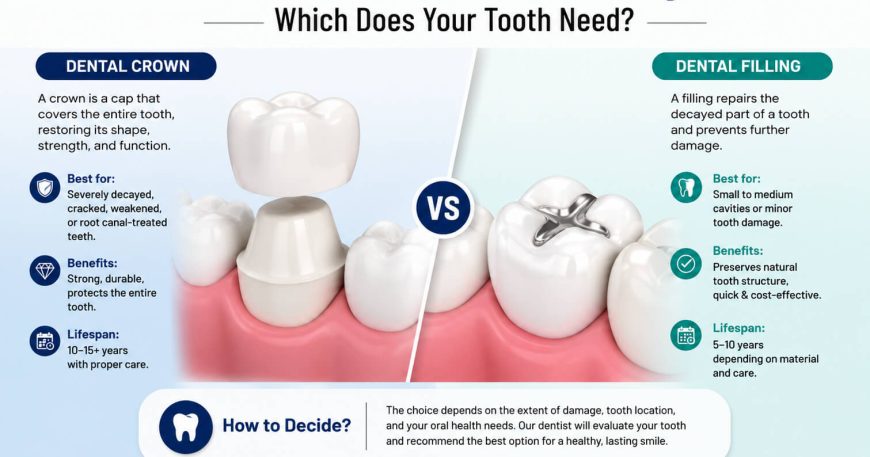
A dental crown is a cap placed over a tooth to restore its shape, strength and function.
The total treatment cost may therefore include both the RCT and the crown.
Indicative dental crown prices in Delhi
| Crown type | Indicative cost |
|---|---|
| Metal crown | ₹2,000–₹5,000 |
| Metal-ceramic / PFM crown | ₹4,000–₹8,500 |
| Zirconia crown | ₹7,500–₹16,000 |
| E-max / All-ceramic crown | ₹10,000–₹18,000 |
These are indicative market examples, not Wisdom Bites prices. The actual cost depends on the material, laboratory, tooth condition and clinic.
Example: RCT Cost With Crown
| Treatment | RCT cost | Crown cost | Estimated total |
|---|---|---|---|
| Front tooth with restoration | ₹3,000–₹6,500 | Depends on restoration | Individual estimate |
| Premolar with PFM crown | ₹4,000–₹8,500 | ₹4,000–₹8,500 | ₹8,000–₹17,000 |
| Molar with zirconia crown | ₹5,000–₹12,000 | ₹7,500–₹16,000 | ₹12,500–₹28,000 |
A crown is not automatically required for every root-canalled tooth. The dentist decides based on remaining tooth structure, location and fracture risk.
Source: Published Delhi crown and RCT pricing examples.
Braces & Faces+2
6. Factors Affecting Root Canal Treatment Cost
Several factors influence the final RCT price.
1. Type of Tooth
Front teeth generally have simpler canal anatomy than molars. Molars may require additional time and technical work.
2. Number of Root Canals
A tooth with multiple canals may require more cleaning, shaping and sealing.
3. Severity of Infection
Advanced infection or complications may require additional procedures.
4. Treatment Technology
The equipment and techniques used by the dentist can influence treatment planning and cost.
5. Dentist’s Experience and Specialisation
The complexity of a case and whether treatment requires an endodontist may affect the professional fee.
6. Single-Sitting or Multiple-Sitting Treatment
The number of appointments depends on the clinical condition and treatment plan.
7. Crown and Restoration Requirements
If the tooth needs a crown or additional restoration, the overall treatment expense increases.
8. Re-Root Canal Treatment
If a previously treated tooth develops another infection, re-treatment may require removing old filling material and addressing the cause of failure.
This can be more complex than an initial RCT.
7. What Are the Different Types of Root Canal Treatment?
Root canal treatment can be classified according to the condition of the tooth and the type of procedure required.
A. Conventional Root Canal Treatment
This is the standard procedure used to remove infected pulp, clean the canals and seal the tooth.
B. Single-Sitting Root Canal Treatment
In selected cases, the dentist can complete the main root canal procedure in one appointment.
It may be suitable when the tooth condition and clinical findings allow the treatment to be completed safely.
C. Multiple-Sitting Root Canal Treatment
Some cases require more than one appointment, particularly when the infection or canal condition needs additional management.
D. Re-Root Canal Treatment
Re-RCT is performed when a previously treated tooth develops persistent or recurring infection or when the earlier treatment needs correction.
The dentist removes existing root filling material, cleans the canals again and reseals them when appropriate.
E. Surgical Endodontic Treatment
In certain complex cases, an endodontic surgical procedure may be considered when conventional treatment or re-treatment is not sufficient.
The appropriate treatment depends on clinical examination and imaging.
8. How Does Root Canal Treatment Work?
Image suggestion: Use an original educational illustration commissioned for Wisdom Bites showing the stages of RCT. Do not download third-party dental diagrams.
Root canal treatment follows a series of clinical steps.
Step 1: Dental Examination
The dentist checks the affected tooth and asks about pain, sensitivity and other symptoms.
Step 2: Dental X-ray
An X-ray helps evaluate the roots, surrounding bone and possible infection.
Step 3: Local Anaesthesia
The dentist numbs the treatment area to make the procedure comfortable.
Step 4: Access Opening
A small opening is made in the tooth to reach the pulp chamber.
Step 5: Removal of Infected Pulp
The infected or damaged pulp is removed from inside the tooth.
Step 6: Cleaning and Shaping
The root canals are cleaned and shaped to prepare them for filling.
Step 7: Sealing the Root Canals
The cleaned canals are filled with a suitable biocompatible material and sealed.
Step 8: Final Restoration
The tooth receives an appropriate restoration. Depending on the remaining tooth structure, a dental crown may be recommended.
The American Association of Endodontists’ root canal procedure guide provides further information about the treatment process.
9. Is Root Canal Treatment Painful?
One common concern among patients is whether root canal treatment is painful.
Modern root canal treatment is performed using local anaesthesia, which numbs the affected area during the procedure.
The purpose of RCT is to treat the infection and relieve pain caused by inflamed or infected dental pulp.
Some patients may experience mild soreness or tenderness after the procedure. This usually improves with time and appropriate care.
The American Association of Endodontists explains that modern root canal procedures are generally comfortable and are intended to relieve the pain associated with infected teeth.
Read more: AAE – Root Canal Treatment Explained.
10. How Long Does Root Canal Treatment Take?
The duration of RCT depends on the type of tooth, infection, canal anatomy and treatment complexity.
| Treatment | General appointment expectation |
|---|---|
| Front tooth RCT | May be completed in one appointment |
| Premolar RCT | One or more appointments |
| Molar RCT | One or more appointments |
| Re-RCT | May require additional treatment time |
According to the American Association of Endodontists, many root canal treatments can be completed in one or two visits.
At Wisdom Bites, single-sitting RCT is offered for suitable cases. However, not every patient is a candidate for single-visit treatment.
11. Benefits of Root Canal Treatment
Root canal treatment offers several important advantages when the natural tooth can be successfully preserved.
1. Saves the Natural Tooth
RCT helps preserve the affected tooth rather than removing it.
2. Relieves Toothache
Treating infected pulp helps address the source of pain.
3. Restores Chewing Function
After appropriate restoration, the treated tooth can function during everyday chewing.
4. Prevents Further Infection
Cleaning and sealing the root canals helps prevent further bacterial contamination.
5. Maintains Natural Tooth Alignment
Preserving the natural tooth helps avoid the space created by extraction.
6. Can Reduce the Need for Tooth Replacement
Saving a natural tooth may avoid the need for replacement options such as dental implants or bridges.
12. When Do You Need Root Canal Treatment?
Not every toothache requires a root canal. However, certain symptoms may indicate that the dental pulp is infected or damaged.
Common symptoms include:
- Persistent toothache.
- Severe pain while chewing.
- Prolonged sensitivity to hot or cold.
- Swelling around the affected tooth.
- A pimple-like swelling on the gums.
- Tooth discolouration.
- Pain that disturbs sleep.
These symptoms do not confirm that RCT is necessary. A dentist must examine the tooth and assess X-rays before recommending treatment.
If you experience facial swelling, fever, difficulty swallowing or breathing, seek urgent medical or dental care.
13. Root Canal Treatment vs Tooth Extraction
When a tooth is badly damaged, patients may wonder whether to save it with RCT or remove it.
The decision depends on whether the tooth can be predictably restored.
| Comparison | Root Canal Treatment | Tooth Extraction |
|---|---|---|
| Main purpose | Preserve natural tooth | Remove affected tooth |
| Natural tooth | Retained | Removed |
| Treatment | Clean, fill and seal canals | Remove tooth |
| Restoration | Filling or crown may be needed | Replacement may be considered |
| Chewing function | Can be maintained after restoration | May change depending on location and replacement |
| Long-term planning | Requires restoration and maintenance | May require implant, bridge or denture |
Whenever a tooth can be predictably restored, preserving it may be a suitable option. However, extraction may be necessary if the tooth is severely damaged or cannot be restored.
Discuss the advantages, limitations and total costs of both options with your dentist.
14. Single-Sitting vs Multiple-Sitting RCT
Patients often prefer single-sitting treatment because it requires fewer appointments.
However, the dentist should decide the treatment schedule based on the clinical condition.
| Comparison | Single-Sitting RCT | Multiple-Sitting RCT |
|---|---|---|
| Appointments | One main treatment visit | Two or more visits |
| Treatment duration | Longer appointment may be required | Treatment divided across visits |
| Convenience | Fewer visits | More visits |
| Suitability | Selected cases | Cases needing staged treatment |
| Treatment decision | Based on examination | Based on examination |
Which option is better?
Neither option is automatically better for every patient.
Single-sitting RCT may be suitable when the dentist can complete the treatment safely in one appointment.
Multiple-sitting RCT may be recommended when additional cleaning, medication or monitoring is needed.
15. How to Choose the Right Dental Clinic in Delhi for RCT
Selecting a dental clinic should involve more than comparing the lowest price.
Before choosing a clinic, consider the following:
- Check the dentist’s qualifications and registration.
- Ask about the treatment plan.
- Understand whether single-sitting RCT is suitable.
- Ask whether X-rays are included.
- Confirm the type of equipment and treatment approach.
- Discuss whether a crown is required.
- Request a complete written cost estimate.
- Understand follow-up and aftercare arrangements.
Root Canal Treatment at Wisdom Bites, Pitampura
Wisdom Bites Dental Clinic & Implant Centre offers root canal treatment in Dakshini Pitampura, New Delhi.
The clinic’s existing service page highlights:
- Single-sitting RCT for suitable cases.
- Modern rotary instruments.
- Treatment focused on preserving natural teeth.
- Examination-based treatment planning.
- Guidance regarding post-treatment restoration.
For more information, visit the Wisdom Bites Root Canal Treatment service page.
16. Aftercare Tips Following Root Canal Treatment
Proper aftercare helps protect the treated tooth and supports recovery.
Recommended aftercare
- Follow your dentist’s instructions.
- Avoid chewing hard foods on the treated tooth until it is permanently restored.
- Take prescribed medication as directed.
- Maintain regular brushing and flossing.
- Attend recommended follow-up appointments.
- Get a crown if your dentist recommends one.
- Contact your dentist if pain or swelling persists or worsens.
The NHS aftercare guidance also recommends attending follow-up appointments and maintaining good oral hygiene after RCT.
17. Common Mistakes to Avoid Before and After RCT
1. Ignoring Persistent Tooth Pain
Delaying dental examination can allow infection to progress.
2. Choosing a Clinic Only Based on Price
A low quotation may not include the complete treatment or necessary restoration.
3. Skipping Dental X-rays
Imaging can be important for diagnosing and planning treatment.
4. Ignoring Crown Recommendations
Some treated teeth need additional protection to reduce the risk of fracture.
5. Missing Follow-Up Appointments
Follow-up helps the dentist assess healing and restoration.
6. Chewing Hard Foods Too Early
A temporarily restored tooth may be vulnerable to damage before final restoration.
7. Stopping Treatment Without Consultation
Do not discontinue a planned multi-visit treatment without discussing it with your dentist.
18. Frequently Asked Questions About Root Canal Cost in Delhi
1. What is the average root canal cost in Delhi?
The cost may range approximately from ₹3,000 to ₹12,000 or more, depending on the tooth, treatment complexity and clinic. Complex re-treatment can cost more.
2. What is the RCT price in Delhi for a front tooth?
A front-tooth root canal may cost approximately ₹3,000–₹6,500 based on published Delhi clinic price examples.
3. What is the molar root canal cost in Delhi?
Molar RCT may cost approximately ₹5,000–₹12,000 or more because molars often have multiple canals and require additional treatment.
4. Is the crown cost included in RCT?
Not always. Many clinics quote the root canal procedure and crown separately. Always confirm the complete treatment price.
5. How much does root canal treatment with a crown cost?
The total depends on the tooth, RCT complexity and crown material. A molar RCT with a zirconia crown may cost approximately ₹12,500–₹28,000 based on the indicative ranges used in this guide.
6. Can root canal treatment be completed in one sitting?
Yes, selected cases can be completed in one sitting. However, some teeth require multiple appointments.
7. Is RCT painful?
Modern RCT is performed under local anaesthesia. Some mild soreness may occur afterwards, but the procedure is generally comfortable.
8. How long does a root canal treatment take?
Many procedures can be completed in one or two visits. The duration depends on tooth anatomy and treatment complexity.
9. Is root canal treatment better than tooth extraction?
When a tooth can be predictably restored, RCT may help preserve it. Extraction is considered when the tooth cannot be saved.
10. How long does a root canal-treated tooth last?
A properly treated and restored tooth can last many years. Its longevity depends on the remaining tooth structure, restoration, oral hygiene and regular dental care.
11. What is re-root canal treatment?
Re-RCT is a procedure used to treat a previously root-canalled tooth when infection persists or returns, or when the earlier treatment requires correction.
12. Where can I get root canal treatment in Pitampura?
Wisdom Bites Dental Clinic & Implant Centre provides root canal treatment in Dakshini Pitampura, New Delhi. Patients can visit its website or contact the clinic for consultation.
