

Dental caries is one of the most common dental problems affecting children. It occurs when bacteria in the mouth produce acids that gradually damage the tooth’s outer surface, leading to cavities. Although it is often associated with sugary foods and drinks, tooth decay can develop due to a combination of dietary habits, plaque accumulation, inadequate oral hygiene and other risk factors.
In babies and toddlers, a particular form of early childhood tooth decay is commonly known as nursing bottle caries or nursing caries. It is often associated with frequent exposure to milk, formula, sweetened drinks or other carbohydrate-containing liquids, especially when a child regularly falls asleep while feeding.
Parents sometimes assume that cavities in milk teeth are not a serious concern because these teeth will eventually fall out. However, untreated dental caries can cause pain, infection, difficulty eating and problems that may affect a child’s overall well-being.
Understanding the causes, early warning signs and preventive measures can help parents protect their child’s teeth from an early age.
1. What Is Dental Caries?
Dental caries, commonly called tooth decay or cavities, is a disease that damages the hard tissues of a tooth.
The mouth naturally contains different types of bacteria. When a child consumes foods or drinks containing fermentable carbohydrates, certain bacteria in dental plaque use these carbohydrates and produce acids.
These acids gradually remove minerals from the tooth enamel. If this process continues without adequate protection and care, the enamel becomes damaged and a cavity may develop.
Dental caries can affect:
- Baby teeth or primary teeth.
- Permanent teeth.
- Front teeth.
- Back teeth and chewing surfaces.
- Areas between two teeth.
Dental caries can develop at any age, including during early childhood. It is important to identify the problem early because initial enamel changes may be managed differently from advanced cavities.
2. What Is Nursing Bottle Caries?
Nursing bottle caries is a commonly used term for a pattern of early childhood tooth decay associated with frequent or prolonged exposure to milk, formula, juice or other sugary liquids.
It is also called:
- Nursing caries.
- Baby bottle tooth decay.
- Baby bottle caries.
- Early childhood caries (ECC), when referring to the broader clinical condition.
The condition commonly affects the upper front baby teeth, although other teeth can also develop cavities.
One important risk factor is allowing a child to repeatedly fall asleep while drinking from a bottle containing milk, formula, juice or another carbohydrate-containing drink.
During sleep, saliva flow generally decreases. Saliva helps neutralise acids and clear food particles from the mouth. Reduced saliva protection, combined with frequent carbohydrate exposure and plaque, can increase the risk of tooth decay.
Important: Early childhood caries is not limited to bottle-fed children. It can also develop in children who breastfeed, consume sugary foods frequently or have other risk factors. Breastfeeding itself should not be treated as the sole cause of cavities.
3. Difference Between Dental Caries, Nursing Caries and Nursing Bottle Caries
These terms are related, but they do not mean exactly the same thing.
| Term | Meaning |
|---|---|
| Dental Caries | The general medical term for tooth decay or cavities. |
| Early Childhood Caries (ECC) | Tooth decay affecting young children, generally under six years of age. |
| Nursing Bottle Caries | A commonly used term for early childhood tooth decay associated with frequent exposure to liquids from a feeding bottle. |
| Nursing Caries | A commonly used term for a pattern of early childhood tooth decay associated with frequent or prolonged feeding exposures. |
The term early childhood caries is preferred in modern dental literature because it describes the broader condition rather than suggesting that bottle-feeding is the only cause.
4. What Causes Dental Caries in Children?
Dental caries develops through the interaction of bacteria, dietary habits, tooth susceptibility and protective factors.
The following are common contributing factors.
4.1 Frequent Consumption of Sugary Foods and Drinks
Frequent exposure to sugar gives acid-producing bacteria more opportunities to produce acids that damage enamel.
Examples include:
- Chocolates and candies.
- Biscuits and cakes.
- Sweetened milk.
- Fruit juices and sugary drinks.
- Sweetened breakfast foods.
- Frequent sugary snacks between meals.
The frequency of sugar exposure matters. Repeated snacking throughout the day can expose teeth to acids more often.
4.2 Sleeping With a Milk or Juice Bottle
Allowing a child to fall asleep with a bottle containing milk, formula, juice or sweetened liquids can increase the risk of early childhood caries.
During sleep, saliva production decreases. This reduces the mouth’s natural ability to clear food residues and neutralise acids.
Parents should avoid using bottles containing sugary drinks as a sleeping aid.
4.3 Inadequate Oral Hygiene
If teeth are not cleaned regularly, plaque can accumulate on their surfaces.
Plaque contains bacteria that contribute to tooth decay. Children usually need assistance from parents or caregivers to brush their teeth properly.
Oral hygiene should begin as soon as the first tooth appears.
4.4 Frequent Feeding Exposures
Frequent exposure to carbohydrate-containing foods and drinks can increase the time teeth spend in an acidic environment.
Parents should discuss age-appropriate feeding patterns with their child’s healthcare professional and avoid frequent sugary drinks or snacks.
4.5 Insufficient Fluoride Protection
Fluoride helps strengthen enamel and makes teeth more resistant to acid attacks.
Children who do not receive appropriate fluoride protection may have a higher risk of developing cavities.
The right toothpaste amount and fluoride exposure depend on the child’s age and individual risk. Parents should follow professional recommendations.
4.6 Delayed Dental Visits
If a child’s first dental examination is delayed, early signs of tooth decay may go unnoticed.
Regular dental visits help identify risk factors and detect developing cavities before they become more advanced.
5. Common Symptoms of Dental Caries in Children
Dental caries may not cause noticeable discomfort during its early stages. Parents should pay attention to changes in the appearance of their child’s teeth and eating behaviour.
Common warning signs include:
| Symptom | What Parents May Notice |
|---|---|
| White spots | Chalky white patches, often near the gumline. |
| Yellow or brown areas | Discolouration on the tooth surface. |
| Visible holes | Small or larger cavities in the teeth. |
| Tooth sensitivity | Discomfort while eating or drinking. |
| Toothache | Pain that may occur while chewing or at other times. |
| Swollen gums | Swelling around an affected tooth. |
| Difficulty eating | A child avoids chewing or prefers one side of the mouth. |
| Bad breath | Persistent unpleasant breath may occur alongside oral health problems. |
A visible white spot can be an early sign of enamel demineralisation, but not every white mark is tooth decay. A dentist needs to examine the tooth to identify the cause.
Do not wait for your child to complain of pain. Young children may not be able to explain dental discomfort clearly.
6. Why Are Baby Teeth Important?
Baby teeth, also called primary teeth or milk teeth, play an important role in a child’s growth and development.
They are not simply temporary teeth. They help children perform several important functions.
Proper Chewing and Nutrition
Healthy baby teeth help children bite and chew food comfortably. Untreated cavities can make eating painful and may affect food choices.
Speech Development
Primary teeth contribute to the development of certain speech sounds. Missing or damaged teeth may affect how some children pronounce words.
Maintaining Space for Permanent Teeth
Baby teeth help maintain the space required for permanent teeth to erupt in their correct positions.
Premature loss of a baby tooth may sometimes result in space-related problems, depending on the tooth and the child’s dental development.
Healthy Oral Development
Maintaining healthy primary teeth supports normal oral function and helps children develop good dental habits.
Treating dental caries early can help reduce discomfort and prevent the condition from becoming more complicated.
7. How Does Nursing Bottle Caries Develop?
Nursing bottle caries usually develops over time through repeated exposure to carbohydrates, plaque bacteria and inadequate protective factors.
A simplified process is:
Step 1: Exposure to carbohydrates
The child regularly consumes milk, formula, juice or other carbohydrate-containing foods and drinks.
Step 2: Plaque accumulation
Bacteria accumulate on the surfaces of the teeth and form dental plaque.
Step 3: Acid production
Certain bacteria use fermentable carbohydrates and produce acids.
Step 4: Enamel demineralisation
Repeated acid exposure removes minerals from the enamel.
Step 5: Cavity formation
If the damage progresses, the enamel breaks down and a visible cavity may develop.
This process can affect multiple teeth if risk factors continue.
8. Stages of Tooth Decay in Children
Tooth decay can progress through different stages. Recognising these stages helps parents understand why early dental evaluation matters.
| Stage | What Happens | Possible Appearance |
|---|---|---|
| Initial stage | Minerals begin to leave the enamel. | White or chalky spots. |
| Early cavity | Enamel damage progresses. | Brown or darker areas may appear. |
| Advanced decay | The cavity extends deeper into the tooth. | Visible hole or broken tooth surface. |
| Pulp involvement | Decay reaches the inner pulp tissue. | Pain, sensitivity or infection may occur. |
| Dental infection | Infection may develop around the tooth. | Swelling, pus or facial swelling may occur. |
The exact stage cannot be determined reliably from appearance alone. A dentist may need a clinical examination and, when appropriate, dental X-rays.
9. Treatment Options for Dental Caries in Children
The treatment of dental caries depends on the child’s age, the affected tooth, the extent of decay and whether the pulp is involved.
Not every cavity requires the same treatment.
9.1 Fluoride Treatment
For selected early lesions, professional fluoride treatment may help strengthen enamel and support remineralisation.
It is generally considered when the tooth has early changes and has not developed a cavity requiring restorative treatment.
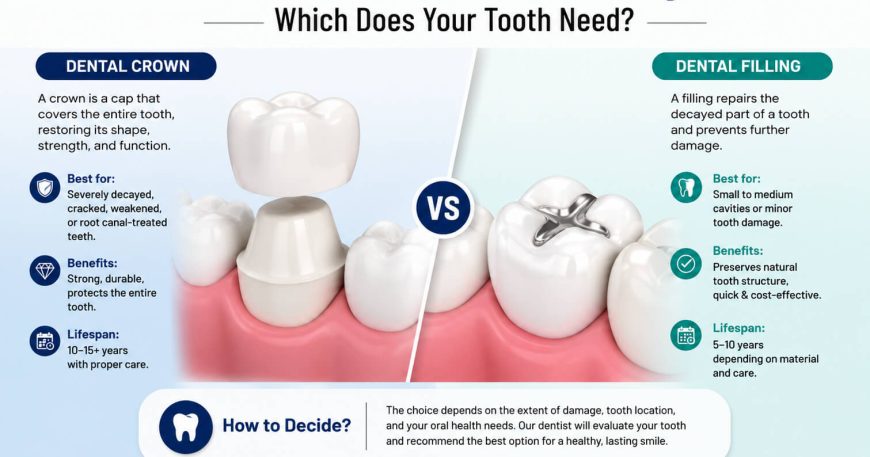
9.2 Dental Filling
A filling may be recommended when a cavity has developed but the tooth can still be restored.
The dentist removes or manages the affected tooth structure as appropriate and restores the tooth with a suitable dental material.
9.3 Pulp Treatment
If decay reaches the pulp, a dentist may recommend pulp therapy.
Depending on the condition of the tooth, treatment may include procedures such as pulpotomy or pulpectomy.
9.4 Dental Crown
A crown may be recommended when a baby tooth has extensive damage and requires additional protection.
The choice of restoration depends on the tooth’s condition and the child’s treatment needs.
9.5 Tooth Extraction
Extraction may be considered when a tooth is severely damaged, cannot be restored or has another clinical reason for removal.
If a baby tooth is removed prematurely, the dentist may assess whether a space maintainer is needed.
The goal is to preserve a healthy, functional tooth whenever clinically possible. Parents should not assume that every decayed baby tooth needs extraction.
10. How to Prevent Nursing Bottle Caries
Prevention begins with simple daily habits. Parents and caregivers play a major role in protecting children’s teeth.
10.1 Clean the Mouth From an Early Age
Before teeth appear, parents can gently clean the baby’s gums with a clean, soft, damp cloth.
Once the first tooth erupts, begin brushing with an age-appropriate soft toothbrush.
10.2 Use Age-Appropriate Fluoride Toothpaste
The amount of toothpaste matters because young children may swallow some of it.
General guidance from the Indian Dental Association includes:
| Child’s Age | Recommended Toothpaste Amount |
|---|---|
| Below 3 years | A smear or rice-grain-sized amount of fluoride toothpaste, where recommended based on the child’s risk. |
| 3–6 years | A pea-sized amount of fluoride toothpaste. |
Parents should supervise brushing and seek advice from a dentist about the appropriate fluoride concentration and amount for their child.
10.3 Avoid Sugary Drinks in Feeding Bottles
Avoid giving juice, sweetened water or other sugary drinks in a baby’s feeding bottle.
Offer water in an age-appropriate way when suitable for the child’s age and feeding needs.
10.4 Avoid Using a Bottle as a Sleep Aid
Try not to let your child fall asleep with a bottle containing milk, formula or sugary drinks.
Follow age-appropriate feeding advice from your paediatrician and discuss bottle-weaning when appropriate.
10.5 Limit Frequent Sugary Snacks
Try to reduce frequent exposure to:
- Candies.
- Chocolates.
- Sweet biscuits.
- Cakes.
- Sugary beverages.
- Packaged sweet drinks.
Offer balanced meals and age-appropriate snacks instead.
10.6 Schedule Regular Dental Check-Ups
A child’s first dental visit should take place within six months after the first tooth appears and no later than the first birthday, according to the American Academy of Pediatric Dentistry.
Regular visits help assess dental development, identify early signs of decay and provide personalised preventive advice.
11. Importance of Early Dental Check-Ups
Many parents wait until their child develops pain before visiting a dentist. However, early dental check-ups are important even when the child appears comfortable.
A dental examination may help identify:
- Early enamel changes.
- Plaque accumulation.
- Existing cavities.
- Feeding-related risk factors.
- Oral hygiene problems.
- Tooth development concerns.
The dentist can also explain brushing techniques, appropriate toothpaste use and dietary habits.
For children who have already experienced cavities, the dentist may recommend more frequent follow-up visits based on their individual risk.
12. Common Mistakes Parents Should Avoid
Some everyday habits may unintentionally increase a child’s risk of tooth decay.
| Common Mistake | Better Approach |
|---|---|
| Letting the child sleep with a bottle of juice. | Avoid sugary drinks in feeding bottles, particularly at bedtime. |
| Assuming milk teeth do not need treatment. | Get cavities assessed and treated when necessary. |
| Starting brushing very late. | Begin cleaning as soon as the first tooth appears. |
| Giving sugary snacks frequently. | Limit between-meal sugar exposure. |
| Ignoring white spots on teeth. | Arrange a dental examination to identify their cause. |
| Using too much toothpaste. | Follow age-appropriate toothpaste guidance. |
| Waiting for pain before visiting a dentist. | Arrange preventive dental check-ups early. |
| Treating every cavity as an extraction case. | Ask the dentist about suitable tooth-preserving treatment options. |
13. When Should You Visit a Dentist?
Parents should arrange a dental appointment if they notice:
- White or brown spots on their child’s teeth.
- Visible holes or broken areas.
- Pain while eating.
- Sensitivity to hot or cold foods and drinks.
- Persistent bad breath alongside other dental symptoms.
- Swollen or bleeding gums.
- Changes in eating or chewing behaviour.
Seek urgent dental or medical assessment if your child has facial swelling, fever with dental symptoms, pus or severe pain. Rapidly increasing swelling, difficulty swallowing or breathing requires emergency medical attention.
Early assessment can help prevent complications and identify the most appropriate treatment.
14. Dental Caries in Children: An Important Public Health Concern
Dental caries in children is not just a cosmetic concern. Untreated decay can cause pain, infection and difficulty eating.
The World Health Organization’s India Oral Health Country Profile reports an estimated 43.3% prevalence of untreated caries in deciduous teeth among children aged 1–9 years, using 2019 estimates.
This figure highlights the importance of improving awareness, preventive oral hygiene and access to early dental care.
The figure represents an India-wide estimate. It should not be interpreted as the current prevalence in Delhi or as a statistic specifically for nursing bottle caries.
Parents can help reduce the risk by starting oral hygiene early, limiting frequent sugary exposures and arranging regular dental check-ups.
Conclusion
Dental caries, nursing caries and nursing bottle caries are important childhood dental health concerns. Although early childhood tooth decay can be influenced by feeding habits, it is not caused by one factor alone.
Regular oral hygiene, age-appropriate fluoride use, healthy dietary habits and early dental visits can help protect children’s teeth.
Parents should not ignore white spots, brown patches or visible cavities in baby teeth. Early diagnosis allows a dentist to assess the condition and recommend suitable preventive or restorative care.
If you notice signs of tooth decay in your child, consider arranging a dental examination at Wisdom Bites Dental Clinic & Implant Centre, Dakshini Pitampura, New Delhi.
Book a dental appointment: https://wisdombites.in/book-appointment/
Call: +91-9667972627
8. FAQ Section
1. What is dental caries?
Dental caries is the medical term for tooth decay. It occurs when acids produced by bacteria in dental plaque gradually damage the tooth structure and create cavities.
2. What is nursing bottle caries?
Nursing bottle caries is a commonly used term for early childhood tooth decay associated with frequent or prolonged exposure to milk, formula, juice or other carbohydrate-containing liquids, especially around sleep.
3. Is nursing caries the same as nursing bottle caries?
The terms are often used interchangeably. Both describe patterns of early childhood tooth decay associated with feeding-related exposures. Early childhood caries is the broader modern clinical term.
4. What causes dental caries in babies?
Dental caries in babies can develop due to plaque bacteria, frequent exposure to sugary or carbohydrate-containing foods and drinks, inadequate oral hygiene, insufficient fluoride protection and individual risk factors.
5. Can milk cause cavities in babies?
Milk contains naturally occurring sugars. Frequent exposure, particularly when a child falls asleep while feeding and teeth are not cleaned appropriately, may contribute to tooth decay. The overall feeding pattern, oral hygiene and other risk factors also matter.
6. Can breastfeeding cause nursing caries?
Early childhood caries can occur in breastfed children, but breastfeeding should not be considered the sole cause. Feeding frequency, age, other dietary exposures, oral hygiene and individual risk factors all matter. Parents should discuss feeding and dental care with their child’s healthcare professionals rather than abruptly stopping breastfeeding.
7. What are the early signs of nursing bottle caries?
Early signs may include chalky white spots near the gumline. As decay progresses, yellow or brown patches, visible cavities, sensitivity and toothache may develop.
8. Are cavities in baby teeth serious?
Yes. Untreated cavities can cause pain, infection and difficulty eating. Baby teeth also support chewing, speech development and space maintenance for permanent teeth.
9. How can parents prevent nursing bottle caries?
Parents can help prevent it by starting oral hygiene when the first tooth appears, using age-appropriate fluoride toothpaste, avoiding sugary drinks in bottles, limiting frequent sugary snacks and arranging regular dental check-ups.
10. At what age should a child first visit a dentist?
The American Academy of Pediatric Dentistry recommends establishing a dental home within six months after the first tooth erupts and no later than the child’s first birthday.
11. Can early tooth decay be reversed?
Some early enamel changes without a cavity may be managed through remineralisation and professional preventive care. Once a cavity has formed, restorative treatment may be needed. A dentist should assess the tooth.
12. Does every cavity in a baby tooth need extraction?
No. Depending on the extent of decay, treatment may include preventive care, fillings, pulp therapy or a crown. Extraction is considered when the tooth cannot be suitably restored or when clinically indicated.
